Modern biblical scholarship often raises questions that sound unsettling at first—like this one:
Was Yahweh, the God of Israel, originally just one god among many in the Canaanite pantheon?
For many Christians, that question might feel like an attack on the faith. But when examined closely—both historically and theologically—it actually leads to a more profound understanding of God’s long work in human history. Far from undermining Christianity, this view reveals a God who is not small or tribal, but eternally reaching, always revealing, and drawing people across all cultures into the knowledge of Himself.
Historical Context: Canaan, Yahweh, and El
Ancient Canaanite religion centered around a pantheon of gods. At the top was El, the creator god and father of the divine council. Other figures included Baal (storm and fertility god), Asherah (El’s consort), Anat, Mot, and others.
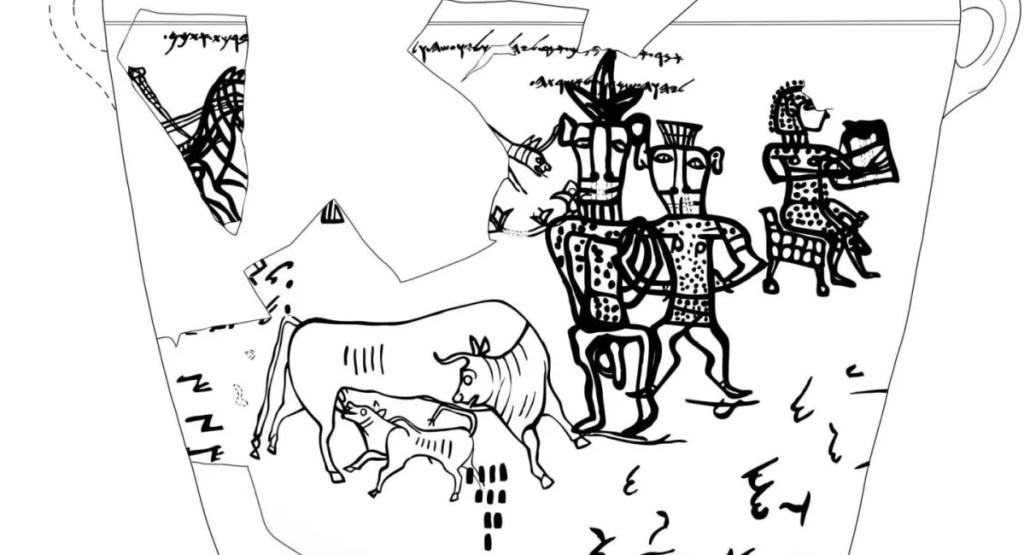
Surprisingly, Yahweh does not appear in these traditional Canaanite records, such as the Ugaritic tablets. Instead, evidence from places like Edom, Seir, and Midian (southern regions outside Canaan) suggest that Yahweh was originally a southern warrior or storm deity, known to nomadic tribes. Verses like these support that idea:
“Yahweh came from Sinai, and dawned from Seir upon us; he shone forth from Mount Paran.” – Deuteronomy 33:2
“God came from Teman, the Holy One from Mount Paran.” – Habakkuk 3:3
These verses place Yahweh’s origins outside of the traditional Israelite homeland—before Israel entered the Promised Land.
When Israel reached Canaan, something unique happened: Yahweh absorbed the titles and attributes of El, the Canaanite high god. In the Hebrew Bible, Yahweh is sometimes called:
- El Elyon – “God Most High”
- El Shaddai – “God Almighty”
- Elohim – A generic term for “Gods” or “God”
This suggests not that Israel “invented” God, but that they identified Yahweh as the one true God, and in doing so, redefined and replaced the local pantheon.
How Can Christians Be Sure Yahweh Is the Same God We Worship Today?
- Continuity of Revelation
While names like El, Elohim, or Yahweh evolved in usage, the identity of God remains consistent across Scripture:
- Creator of heaven and earth (Genesis 1)
- Deliverer and covenant-maker (Exodus 3)
- Righteous judge and merciful redeemer (Psalms, Prophets)
- Revealed fully in Jesus Christ (John 1:1,14)
“I am the Lord, and I do not change.” – Malachi 3:6
The God worshiped by Abraham, Moses, the prophets, and the apostles is one and the same—not an invention, but a person who reveals Himself gradually across time and culture.
- Fulfillment in Christ
Christians affirm that the same Yahweh who spoke from the burning bush has spoken through the Son:
“In the past God spoke… through the prophets… but in these last days he has spoken to us by his Son.” – Hebrews 1:1–2
Jesus is the embodied Word of Yahweh (John 1:14). He does not replace the Old Testament God—He is Yahweh in the flesh, making known the fullness of who God is.
God Did Not Only Speak Through Israel
One common misconception is that God only ever revealed Himself to the Jews. But the Bible tells a different story—a more expansive and inclusive one.
Melchizedek – The Priest of God Most High
In Genesis 14, Melchizedek, the king-priest of Salem (later Jerusalem), blesses Abraham:
“Blessed be Abram by God Most High, Creator of heaven and earth.” – Genesis 14:19
Melchizedek was not an Israelite, yet he is recognized as a true priest of God. Hebrews 7 even says he foreshadows Christ, showing that true knowledge of God existed outside of Israel.
Balaam – A Non-Israelite Prophet
In Numbers 22–24, Balaam, a prophet from Mesopotamia, hears directly from Yahweh. Though not part of Israel, he speaks blessings over them under divine inspiration.
“The oracle of Balaam… the oracle of one who hears the words of God…” – Numbers 24:3–4
Again, we see that Yahweh’s voice and presence were not confined to the boundaries of Israel.
Job – A Righteous Man Outside the Covenant
The book of Job centers around a man who is not Israelite, yet is described as blameless, upright, and God-fearing. He has no access to Torah, temple, or covenant—but he knows and trusts God.
Realistic and Theologically Grounded: God’s Global Presence
So the idea that Yahweh was known in some form beyond Israel isn’t heresy—it’s biblical.
When Israel entered Canaan and identified Yahweh as the one true God, they weren’t inventing a deity—they were recognizing Him more fully, consolidating what others had known in part.
This is reflected in Deuteronomy 32:8–9 (in the Dead Sea Scrolls version):
“When the Most High (El Elyon) gave the nations their inheritance… he fixed the boundaries of the peoples according to the number of the sons of God. But Yahweh’s portion is his people, Jacob his allotted heritage.”
This may indicate that El divided the nations, and Yahweh was given Israel, but ultimately, Yahweh and El are identified as the same God.
Thus, Yahweh was not merely one god among many, but the one true God gradually revealing Himself, first in shadows and fragments, then in covenant, and finally in the person of Christ.
Final Reflection: A Faith That Honors Both History and Revelation
Understanding that Yahweh’s name and worship evolved within a cultural and historical context doesn’t threaten faith—it enriches it. It shows that:
- God works through human cultures, not apart from them.
- God’s revelation is progressive, not static.
- God’s mission was always to reach all peoples, not just one tribe.
The journey from Yahweh of the desert to the Father revealed in Jesus Christ is not a contradiction—it is the story of God meeting humanity where we are, to bring us where He is.


 The Good Physician: In Search of the Logos
Leave a comment