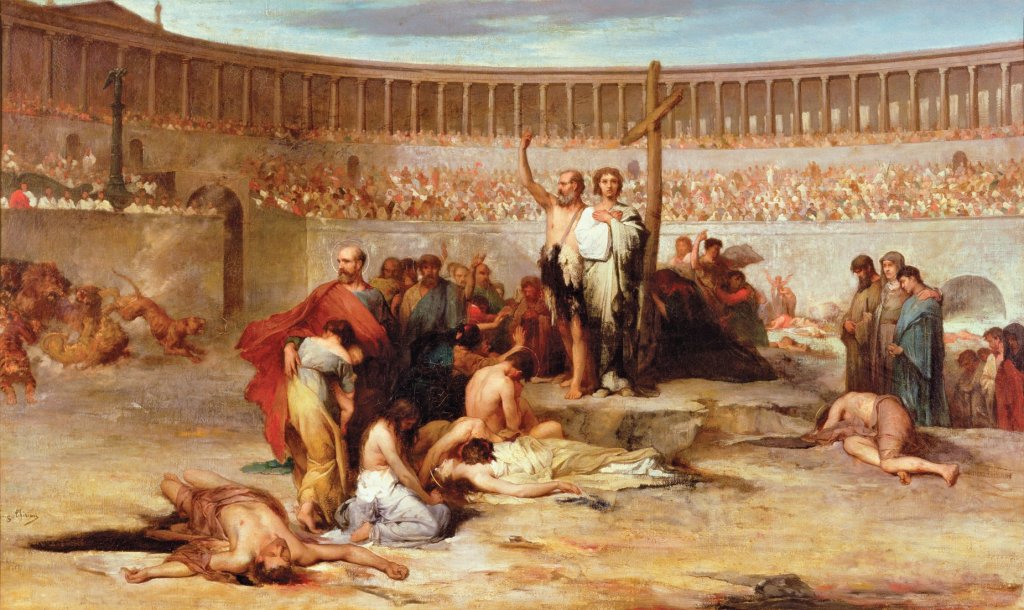
No matter who you follow, you are a slave to something.
In the Gospels, Jesus often spoke about slavery and freedom, but His teachings go far beyond political or social issues. Rather than referring to literal, physical slavery, Jesus used these terms to address spiritual bondage—the enslavement to sin that holds every human heart captive. Through a deeper exploration of these teachings, we can understand that true freedom is not about autonomy or the absence of constraints; it is about liberation from sin’s power and living in alignment with God’s will. This blog post seeks to unpack the concept of slavery and freedom in the Gospels, providing a clearer understanding of Jesus’ message of spiritual liberation and faith-building insights that can help us walk in true freedom today.
Jesus’ Definition of Slavery: Enslavement to Sin
In John 8:34, Jesus states, “Truly, truly, I say to you, everyone who practices sin is a slave to sin.” Here, Jesus is not referring to physical slavery but to a deeper spiritual bondage. The Greek word doulos (δοῦλος), meaning “slave,” implies total subjugation. When Jesus says that everyone who practices sin is a slave, He is not merely talking about sinful actions in isolation but about the power of sin itself. Sin is not just a series of wrong choices; it is a force that controls the human will. We see this further emphasized in Romans 6:16, where Paul writes, “Do you not know that if you present yourselves to anyone as obedient slaves, you are slaves of the one whom you obey, either of sin, which leads to death, or of obedience, which leads to righteousness?” The power of sin rules over those who are not freed by Christ, keeping them enslaved and trapped in a cycle of disobedience.
The Contrast Between Slavery and Freedom in Christ
Jesus contrasts this spiritual slavery with the freedom He offers. In John 8:35-36, He says, “The slave does not remain in the house forever; the son remains forever. So if the Son sets you free, you will be free indeed.” This profound statement reveals that freedom is not just the removal of physical shackles or oppression but the entrance into a new relationship with God. Jesus emphasizes that a slave has no lasting place in God’s kingdom, but a son does. In other words, those enslaved to sin have no permanent place in the family of God, while those who are freed by Christ are adopted into His family and made co-heirs with Him. The freedom that Jesus offers is a permanent, unshakable place in God’s kingdom, where we are no longer ruled by sin but are empowered to live as children of God.
Paul also reflects this truth in Romans 6:17-18, where he writes, “But thanks be to God, that you who were once slaves of sin have become obedient from the heart to the standard of teaching to which you were committed, and, having been set free from sin, have become slaves of righteousness.” This passage highlights the transformative power of Christ’s freedom. When we are freed from the bondage of sin, we are no longer enslaved to unrighteousness but become slaves to righteousness—our lives now oriented around serving God.
Historical Context: Slavery in First-Century Judea and Rome
Understanding slavery in the historical context of first-century Judea and the Roman Empire can help us better grasp the metaphor Jesus used. Slavery in this time was not necessarily permanent, and slaves could sometimes buy or be granted their freedom. However, slaves had no legal rights and were completely dependent on their masters for survival. They were at the mercy of their masters, unable to liberate themselves by their own means. This image helps us understand why Jesus used slavery as a metaphor for sin. Just as a slave cannot free themselves from their master’s control, we, without Christ, cannot free ourselves from the power of sin. We are dependent on an external authority—Jesus Christ—to set us free.
This context also sheds light on why Jesus came to offer freedom: not to abolish physical slavery, but to address the much greater issue of spiritual slavery. While the world around us may be in need of social and political liberation, Jesus focused on the heart of the matter—the need for freedom from the spiritual forces that enslave us to sin and death.
True Freedom in Christ: The Paradox of Surrender
One of the most profound paradoxes in Jesus’ teachings is found in Matthew 16:24-25: “If anyone would come after me, let him deny himself and take up his cross and follow me. For whoever would save his life will lose it, but whoever loses his life for my sake will find it.” At first glance, this might seem contradictory. How can denying oneself, taking up a cross, and losing one’s life lead to true freedom? Yet, this is the heart of Jesus’ message.
True freedom, according to Jesus, is not the absence of all constraints. It is freedom from the control of sin and the power of self-centeredness. Freedom in Christ is about being liberated from living for ourselves and, instead, living for God’s purposes. In Luke 4:18, Jesus proclaims, “The Spirit of the Lord is upon me, because he has anointed me to proclaim good news to the poor. He has sent me to proclaim liberty to the captives and recovering of sight to the blind, to set at liberty those who are oppressed.” Jesus’ mission was to bring spiritual freedom—freedom from the oppression of sin, spiritual blindness, and death.
This message is further illuminated in the “Year of Jubilee” described in Leviticus 25. In this year, all debts were forgiven, and all slaves were set free. This symbolic act pointed forward to the true freedom Jesus would bring: the forgiveness of sins and reconciliation with God. His mission was not merely to bring political freedom but to liberate humanity from spiritual oppression and death, offering forgiveness and the opportunity to live in the fullness of God’s kingdom.
The Centurion’s Slave: A Picture of Spiritual Bondage
Another powerful moment in the Gospels that sheds light on the concept of freedom comes in the story of the centurion’s slave in Luke 7:1-10 and Matthew 8:5-13. In this story, the centurion approaches Jesus, asking Him to heal his servant who is at the point of death. Jesus marvels at the centurion’s faith and heals the servant, but He does not demand that the servant be freed from his physical slavery. This reinforces that Jesus viewed spiritual slavery as far more significant than physical slavery. The true bondage that Jesus sought to break was not social or political but spiritual. Jesus healed the slave’s body, but the greater need was the healing of his soul through faith in Christ.
Side note: The Greek used In Matthew for the servant of the Centurion is different than in Luke. Luke uses doulos/doulon (δοῦλον) to mean salve/servant but in Matthew the word pais(παῖς) which can mean servant but also young boy, as Matthew used that same word to describe young children and the babies killed under Herod. One can even argue that in Matthew the servant is a male sex slave and Jesus send a sex slave back to work( likely not true as said before Matthew used this word ambiguously depending on context). Furthermore, In Matthew the centurion himself asks Jesus but in Luke it is the Jewish leaders who ask on his part. Just with this info, one could begin to doubt the legitimacy of the text, I know I did, but I include this to mention it in case you learn of it. Simply know that both accounts are the same and its either the servant or son of the centurion. As for the difference in telling, this is answerable as Matthew most likely applied the rules of agency into his story, if which Matthew simply substitute the words of the Jewish leaders to be the Centurion himself as he send them as his agent and in 1 st Century, it would be understood as so.
The True Nature of Freedom: A Life Aligned with God
Ultimately, Jesus’ teachings on slavery and freedom are deeply theological. He was not concerned with political liberation but with addressing the heart of humanity’s condition: the enslavement to sin. True freedom is found in surrendering to Christ, as we see in John 10:10, where Jesus says, “I came that they may have life and have it abundantly.” True freedom is not about autonomy or the absence of constraints. It is about being freed from the control of sin and living in service to God.
Paul beautifully expresses this in 1 Corinthians 7:22: “For he who was called in the Lord as a slave is a freedman of the Lord. Likewise, he who was free when called is a slave of Christ.” In other words, whether we are physically free or enslaved, the ultimate question is who we serve—sin or Christ? Jesus came to offer us true freedom by freeing us from sin’s grip and bringing us into a new relationship with God.
Conclusion: True Freedom is Found in Christ
Through this study of Jesus’ teachings on slavery and freedom, we see that His message is one of profound spiritual liberation. Jesus does not offer freedom in the way the world expects. Instead of political or social liberation, He offers freedom from the enslavement of sin, a freedom that can only be found through faith in Him. True freedom is not about doing whatever we want, but about living in alignment with God’s will, serving Him, and experiencing the abundant life He offers. May we all find our true freedom in Christ, as we surrender our lives to Him and live for His purposes.
Therefore, reflect when conflicting with political or social issues, for when Christ came did he address these issues, if not, it must mean it has no amount of importance in comparison to the issue of enslavement to sin. For a martyr does not worrying for the society or his peers feel or conflict with, rather they care for what God asks. Don’t be a slave to sin, yourself, society, or even a love one, but be a slave to righteousness, the greatest choice one can make.


 The Good Physician: In Search of the Logos
Leave a comment