
Christ’s sacrifice stands in direct opposition to the fundamental ideals held by both Jews and Gentiles of His time. Both groups, though different in their worldviews, shared a common belief: that salvation—or the resolution of life’s ultimate concerns—was a matter of personal effort and self-reliance. The Jews believed that adherence to the Law, the Torah, was the means through which righteousness and salvation were attained. This legalistic approach not only placed the burden of salvation upon human effort but also fostered a sense of self-righteousness, which Christ sought to dismantle. He came to reveal that salvation is not achieved through human effort but through dependence on God’s grace. Rather than relying on their obedience to the Law, Christ called the Jews to trust wholly in Him, for He alone could offer true salvation—freedom from eternal death.
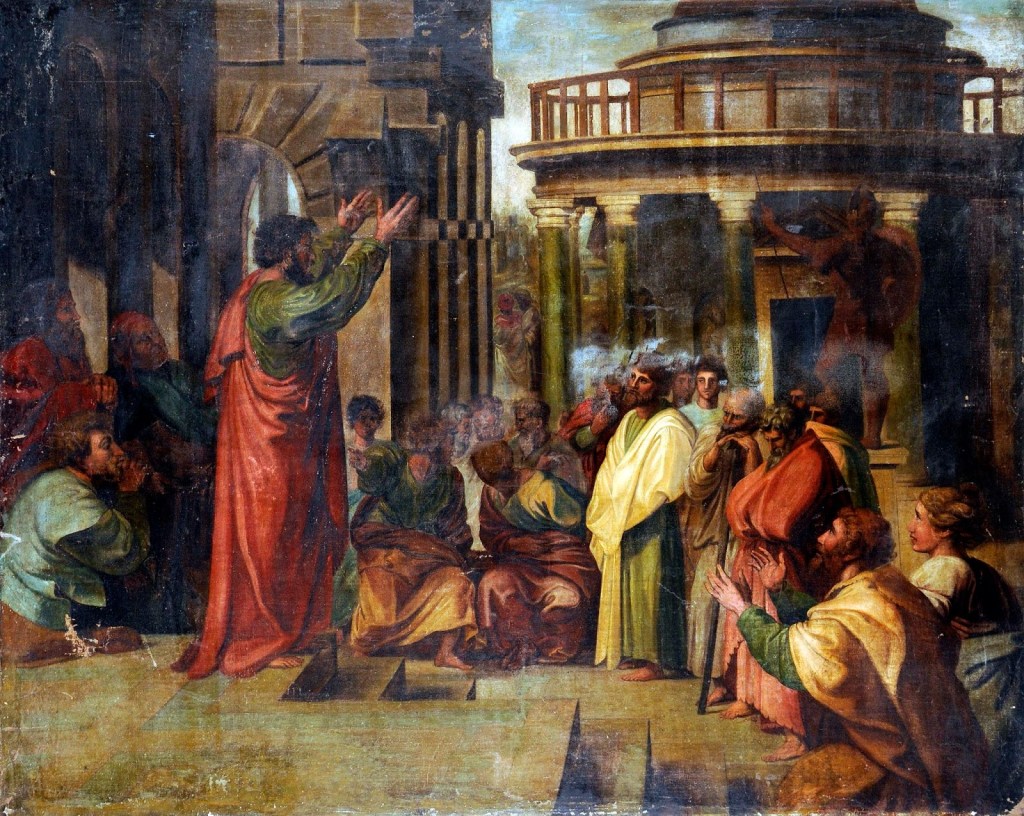
Similarly, the Greeks and Romans placed their hope in wisdom. They believed that through philosophy, logic, and self-improvement, they could resolve the struggles of the human condition. Their pursuit of wisdom allowed them to live more refined, structured lives, but it never led them to the knowledge of the one true God. When confronted with Christ—who did not fit their paradigm of wisdom but instead claimed to bear the weight of sin on behalf of those who placed their faith in Him—they found His message foolish. To them, wisdom was a path of self-elevation, of perfecting oneself through reason and knowledge. Yet, Christ did not call people to build themselves up—He called them to deny themselves, to trust in Him rather than their own intellect or strength.
We see echoes of Christ’s teachings even in the works of the philosophers. Seneca, for instance, advised that one should do good in private, avoiding the temptation to boast of their deeds—a teaching that closely parallels Jesus’ command not to fast or give alms in public for the sake of recognition, but to do so in secret before God. Even Socrates, toward the end of his life, spoke of following the “Logos”—a divine reason or way that is perfect. Yet despite these glimpses of truth, philosophy alone could not lead them to Christ, for true wisdom is not found in self-improvement, but in surrender to God.
Christ is a stumbling block to every generation because He demands that we abandon the belief in our own sufficiency. Human nature resists this—we are taught to believe in ourselves, to overcome obstacles through sheer willpower, and to take pride in our achievements. While confidence can be a useful trait, when it is not rooted in humility, it becomes the seed of ego, and ego is the beginning of sin. The cross is offensive to all who believe they have intrinsic worth apart from God. To know Christ, one must come to Him in complete humility, recognizing that all human wisdom, strength, and righteousness are nothing compared to God’s. This does not mean we are without value, but rather that our value comes from Him, not from ourselves.
When we lay down the burdens of worldly achievement and self-reliance, we can take up the cross that Christ has called us to bear. Too often, we confuse the struggles of this world—financial hardship, social struggles, or personal ambitions—with the trials of following God. But the two are not the same. The world’s burdens weigh us down, while the cross of Christ refines us, drawing us closer to Him. We must learn to distinguish between the false cross of worldly suffering and the true cross that Christ calls us to carry—the one that leads to eternal life.



 The Good Physician: In Search of the Logos
Leave a comment