Does Jesus Answer the Problem of Evil? A Biblical and Theological Exploration
The problem of Evil is one of the most challenging dilemmas in theology and philosophy. It questions how an all-powerful, all-knowing, and benevolent God can allow suffering and injustice to exist. Evil, in this context, is often divided into two categories: moral Evil, which stems from human actions like violence or oppression, and natural Evil, which includes suffering caused by disease and natural disasters.
As a Christian and a student deeply engaged in biblical scholarship, I find this question particularly compelling. It not only intersects theology, philosophy, and historical biblical studies but also challenges how we understand Jesus’ role in addressing suffering. If Jesus is God, as Christian doctrine claims, then he stands at the center of the problem of Evil. How do the Gospels portray his response to suffering? Does his life, teachings, and sacrifice offer an answer to this age-old question?
In this blog, I will explore whether and how Jesus addresses the problem of Evil, examining his words and actions through both theological and academic lenses. This discussion is not only relevant for faith but also for those seeking a deeper understanding of how Christianity engages with one of humanity’s most profound questions.
In Matthew 13: 24-30, Jesus tells his disciples a parable known as the Parable of the Weeds. In 13:26-43, he interprets this parable and comes closest to addressing the question. Jesus tells us the story of a farmer (representing God) who sows good seed, but an enemy (the devil) sows weeds among the wheat. When the servants ask if they should remove the weeds, the master says to let both grow together until the harvest (the final judgment). Two interpretations from this parable explain the triumph of Evil and why Evil is allowed to live among the “good seed.” Firstly, Evil exists because of the work of the devil, someone who we can describe as the opposite or enemy of God and his essence. God allows it to persist temporarily until the final judgment so that he can triumph over it and display his power and character of loving good and hating Evil. Although it makes sense for the narrative of a triumph victory over Evil, why does it have to be in this manner where we still have to suffer from Evil? In verse 29, Jesus allows the weeds (Evil) to grow among the wheat(good) until they have fully grown. This captures the idea that weeds, in some forms, are needed for the grain to grow and be distinguishable for the harvest. Naturally, a farmer would not allow weeds to grow since they kill their product, but Jesus, the farmer, allows Evil to live among his sons so that they may participate in this triumph over Evil, as Jesus never says that the weeds kill the wheat. The weeds do not destroy the grain but rather the soil it’s on, as described in the Parable of the Sower in Matthew 13:18-23. All these suggest that Evil is not from God but rather something that God permits for a time to triumph over before ultimately dealing with it.
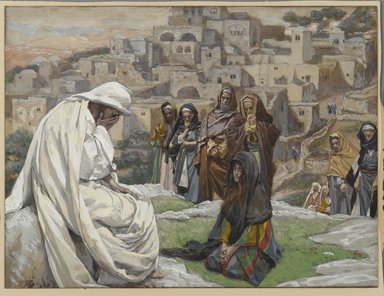
Although Jesus explains the role of Evil and how it interacts with the world, it doesn’t fully answer why it must be in this manner. John 11 provides a profound response to the problem of Evil through the story of Lazarus’ death and resurrection. Jesus deliberately delays coming to Lazarus, explaining that his sickness is not ultimately for death but for the glory of God and to strengthen the faith of his disciples (John 11:4-15). This suggests that suffering is not meaningless but permitted so that a greater good may emerge, because without suffering, God’s power and mercy would not be fully recognized. In John 11:25-26 Jesus arrives and engages Martha with a theological explanation of resurrection and eternal life, showing that suffering has a divine purpose. However, with Mary, he responds differently; he weeps, demonstrating deep compassion for human suffering (John 11:33-35) to provide an example of what evil causes in a righteous person, lament. This contrast shows Jesus’ dual approach: intellectually explaining God’s plan while also emotionally connecting with those in pain to show he recognizes the problem of Evil. The results of these answers can be seen later in John 12:7, where the response given to Martha and experience of Evil allow her to recognize the reason Jesus came to the world, which is to die. This is seen when she anoints him with perfume to prepare him for burial. As Martha shows, Lazarus’ resurrection illustrates that God permits suffering not for its own sake but so that the greater good may come from it and for the spiritual growth of those who suffer. Through this, he indirectly addresses the problem of Evil: suffering exists not without purpose but as a means through which God’s glory is revealed and, through Christ, it will ultimately be defeated.
Jesus’s theodicy to the problem of Evil in Matthew and John can be interpreted as suffering and Evil is necessary for human moral development, allowing people to grow spiritually and witness the greater good/God’s glory. Though, this was not Jesus’ only explanation of the evil present in our world. In Mark and Luke, he takes a different approach. In Luke 13:1- 5, Jesus responds to a question about suffering and why bad things happen. He refers to two tragedies: Pilate killing some Galileans and the collapse of the Tower of Siloam, which killed 18 people. Instead of giving a direct reason for why these events happened, he shifts the focus to repentance: “Do you think that these Galileans were worse sinners than all other Galileans because they suffered this way? I tell you, no! But unless you repent, you too will all perish.” (Luke 13:2-3). Jesus does not explain why the disasters happened but rejects the idea that suffering is always a direct punishment for sin. Instead, he calls people to repentance, suggesting that individuals should focus on their spiritual condition rather than speculating about the cause of Evil. Furthermore, in Mark 7:14-23, when questioned about ritual purity, Jesus focuses on moral corruption. He claims that evil things come from within, specifically “out the heart of man,” and lists many “evils” as products of human free will. Here, Jesus implies that Evil is not just an external force but something deeply rooted in human nature. This idea is also seen in John 3:19, which states, “And this is the judgment: the light has come into the world, and people loved the darkness rather than the light because their works were evil.” Jesus points out that evil persists because people choose it. The rejection of God’s light (himself) is what keeps Evil in the world. In these verses, instead of propagating an explanation of the problem of Evil, Jesus heeds the advice not to worry about the Evil that occurs but to reevaluate the evil one person does. Evil isn’t a nature that exist but a byproduct of human free will to do Evil, and that one should question their own spiritual condition. Jesus is asking, you who worry about what causes suffering haven’t questioned the suffering you have caused. Many would say that Jesus is explaining the problem of evil existing because of free will and would attribute it to Adam and Eve’s fall from the Garden of Eden, but I think there is a more significant point being made. Sin and Evil are seen interchangeably throughout the Bible. For example, in Romans 7:20-21 and Mark 7:14-23 Jesus refers to known sins as Evil. Jesus should be understood as saying why does a person who sin and therefore does Evil, question why there is evil when they make it even more abundant. To draw a parallel to Job, who questioned God as to why he suffered and answered whether Job could understand all that God does. Why does one who has a finite mind question an infinite mind? Simply put, why does one who does evil question evil? Therefore, Jesus answers the Problem of Evil with another question, why do you do evil? In that there is 2 conclusions, one that leads to humility under God or the idea that God, who would have an infinite mind, manner of dealing with the word is wrong. If you truly think about it, the problem of Evil should not be directed towards God, but rather to ask man, why do we do evil?
In conclusion, Jesus portrays Evil as a product of the devil’s actions, with God permitting its temporary existence to triumph over it at the final judgment. Jesus’ explanation does not fully explain why Evil must persist until then. Still, through the account of Lazarus’ resurrection, he presents suffering as a means to reveal God’s glory. Additionally, the call to repentance in Luke and the recognition that evil stems from human choices in Mark further expand our understanding of why Evil continues to exist, but Jesus also turns the question back toward us. If sin and Evil are the same, and humans are filled with sin, how can a partaker in evil question the origin and reason for Evil? Ultimately, Jesus’ theodicy suggests that suffering, though painful and difficult to comprehend, serves a greater purpose: it shapes moral character, strengthens faith, and magnifies God’s glory. .



 The Good Physician: In Search of the Logos
Leave a comment