
Colossians 4:12
“Struggling on your behalf in his prayers, that you may stand mature and fully assured in all the will of God.”This verse highlights a powerful act of humility and love, exemplified by Epaphras, a servant of Christ who labored fervently in prayer for others. Paul presents Epaphras as a model of selfless devotion, interceding on behalf of fellow believers so that they may grow in spiritual maturity and assurance in God’s will. This is not a passive or routine prayer but an active struggle—a deep, heartfelt effort to carry the burdens of others before God.But what does it truly mean to bear another’s burdens? Paul expands on this concept in Galatians.
Galatians 6:1-3
“Brothers, if anyone is caught in any transgression, you who are spiritual should restore him in a spirit of gentleness. Keep watch on yourself, lest you too be tempted. Bear one another’s burdens, and so fulfill the law of Christ. For if anyone thinks he is something, when he is nothing, he deceives himself.”Paul lays out a profound yet challenging call to action: when a brother or sister in Christ stumbles, we are to restore them—not with judgment or superiority, but with gentleness. This restoration is not simply about correcting someone’s mistake; it is about lifting them up in love, carrying their burdens, and walking alongside them in their struggle.This burden-bearing has several dimensions:I
Interceding in Prayer – Just as Epaphras labored in prayer for others, so too are we called to lift up those who struggle. Prayer is not merely a personal exercise; it is an act of love and sacrifice, where we stand before God on behalf of our brothers and sisters. To struggle in prayer means to wrestle spiritually, persistently seeking God’s mercy, strength, and guidance for others.
Fulfilling the Law of Christ – Paul states that by bearing one another’s burdens, we fulfill the law of Christ. What is this law? It is the law of love (John 13:34)—the same love that Christ demonstrated when He bore the ultimate burden of sin on the cross. While we cannot atone for sins, we can imitate Christ by shouldering the struggles of others, offering encouragement, support, and unwavering compassion.
Humility in Service – Bearing another’s burdens requires deep humility. When we pray for others and support them, we must do so out of love, not self-righteousness. Paul warns against the deception of thinking we are superior—believing that we are above our struggling brothers and sisters. If we bear burdens with a mindset of pride, seeing ourselves as more capable or worthy, we deceive ourselves. True humility recognizes that we are nothing apart from Christ, and that the only value we have is because of His sacrifice.Epaphras embodies this principle beautifully. He does not seek recognition or self-glory; instead, he struggles in prayer for the sake of others, desiring that they may stand mature and fully assured in God’s will. His example teaches us that love is not simply spoken—it is demonstrated through action, sacrifice, and deep intercession.
The Call to Bear One Another’s Burdens
When we see a fellow believer struggling, our first response should be to restore, not condemn, and to do so with gentleness and love.Bearing another’s burdens is a form of Christlike service, reflecting His love and sacrifice.Prayer is a powerful way to carry the burdens of others—it is a spiritual labor that strengthens both those who pray and those being prayed for.True humility is essential; we are not better than those we help, and any value we have comes solely from Christ.Let us follow the example of Epaphras and of Christ Himself, struggling in prayer for others, lifting them up in love, and fulfilling the law of Christ by carrying each other’s burdens.
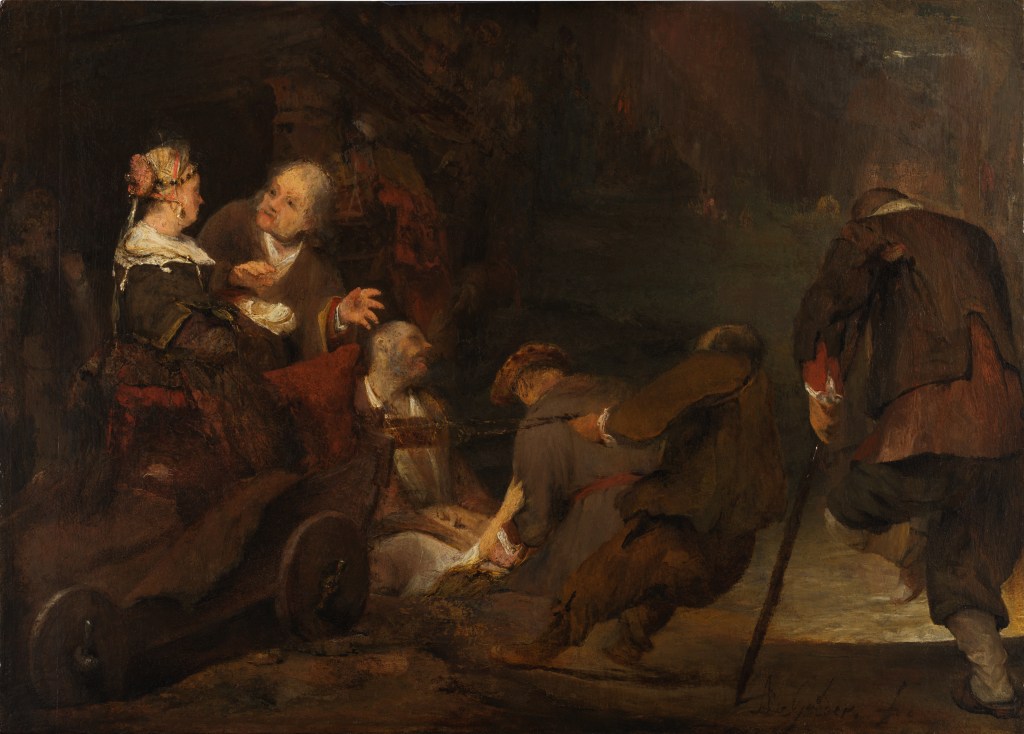



 The Good Physician: In Search of the Logos
Leave a comment